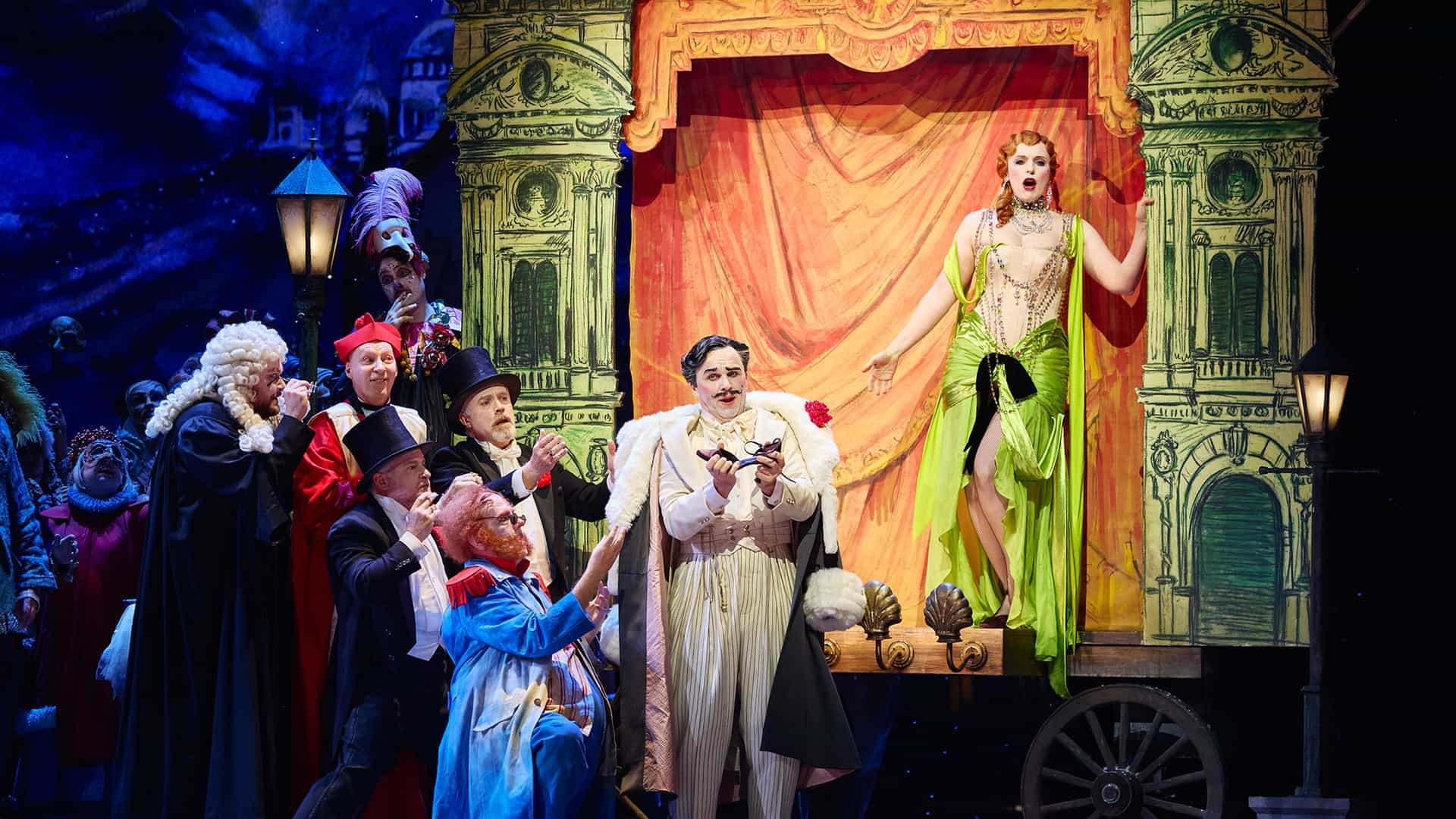
Opera Australia’s new production of Giacomo Puccini’s La Bohème was a resounding theatrical success that captivated the premiere audience with its imaginative visual conception, expressive singing and emotional intensity. Faithful to the spirit of the libretto yet refreshingly original in its visual interpretation, Constantine Costi’s production moves effortlessly between theatrical extravagance and emotional intimacy.
The Regent Theatre’s fairy-tale grandeur lent the evening a sense of occasion. Guests in elegant evening gowns and dinner jackets mingled with a few who might have stepped straight out of Hogwarts, adding a playful touch of magic to the evening.
A noticeably younger and more diverse audience gathered in the ornate foyers, posing for photographs in front of the media wall and embracing the glamour of the premiere. Inside the auditorium, quiet anticipation gave way to laughter at the bohemians’ pranks and enthusiastic applause following the famous arias in the first act.
Ultimately, it was the humanity of Puccini’s characters that enchanted the audience and dispelled the chill of the draughty Regent Theatre, with the performers earning a standing ovation at the end of the opera.
Opera in an Unexpected Setting
With the State Theatre at Arts Centre Melbourne closed for refurbishment, Opera Australia’s temporary move to the Regent Theatre could be seen as an opportunity for cross-fertilisation of audiences, inviting lovers of musical theatre, popular music and comedy to discover the charm of opera.
The former picture palace, however, presents challenges for unamplified voices and a late-Romantic orchestra in full flight. Under the baton of Finnegan Downie Dear, Orchestra Victoria nevertheless delivered clarity, warmth, rhythmic precision and expressive colour, although the orchestra occasionally overwhelmed the singers. Puccini’s orchestral motifs vividly punctuated the bohemians’ lively exchanges, and the alignment of music and movement demonstrated director Constantine Costi’s sensitivity to the score.
A Kaleidoscope of Bohemian Life
Costi’s vision of bohemian Paris comes vividly to life through the contribution of the creative team comprising Dann Barber (sets), Sabina Myers (costumes), Morgan Moroney (lighting), Shannon Burns (movement and assistant direction), Edwina Strobl (second assistant direction), Chloë Dallimore (intimacy direction) and Kiana Daniele (intimacy coordination).
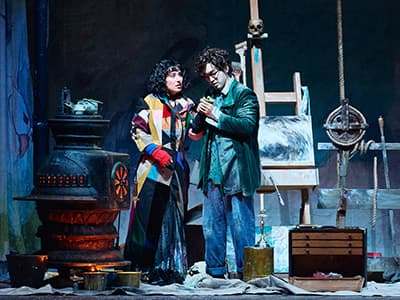
In the opening scene, the artists’ loft glows in delicate whites, yellows and blues, with exposed scaffolding and light filtering through the roof. This luminous palette departs from the conventional drab tones of bohemian poverty, evoking the artists’ irrepressible creative spirit.
The transition from Mimì and Rodolfo’s intimate first-act duet to a bustling European Christmas fair was magical. Carnival figures, nuns, street vendors, bohemians, townsfolk, soldiers, waiters and children populate a kaleidoscope of intersecting characters and moving scenery. The notoriously complex second act unfolded with precision and vitality, without a trace of static standing and singing, while the Opera Australia Chorus and Opera Australia Children’s Chorus sang with cohesion and power. Despite the exuberance of the spectacle, Costi never loses sight of the individual characters and their relationships, maintaining a delicate balance between theatrical invention and dramatic clarity.
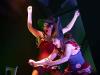
Musetta’s entrance is a feat of theatrical illusion: she emerges from the costume of the Virgin Mary in an elaborate allegorical tableau, revealing a luminous chartreuse gown. Its asymmetrical drapery, embellished bodice and dramatic black bow evoke Belle Époque extravagance.
Myers’ historically informed yet imaginative costumes shape the performers’ posture and movement as well as their appearance. Costume and make-up, for instance, transform Simon Meadows into a convincingly pompous, slightly uptight and naïve Alcindoro, his measured gestures and distinctive physical presence complementing the authority of his resonant baritone.
Soaring Voices, Fragile Lives
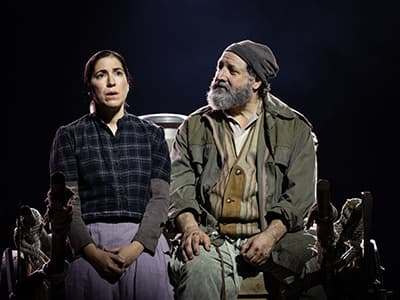
The casting reflects careful attention to vocal quality, acting and physical individuality. Galina Cheplakova’s richly coloured soprano combines a brilliant, powerful upper register with finely controlled dynamics, while her unassuming characterisation makes Mimì honest and affecting. Her mastery of soft singing comes to the fore in the final act, where the delicacy of her phrasing conveys Mimì’s increasing fragility without sentimentality.
Kang Wang’s Rodolfo, a slightly nerdy poet in Harry Potter-style glasses, combined spontaneity with vocal energy and lyrical ease, his warm, full-bodied tenor possessing an appealing baritonal richness.
Their well-matched physical presence and natural chemistry made the lovers’ relationship convincing. In the third act, “Dunque è proprio finita?” was especially effective as their sensitive phrasing and emotional connection conveyed tenderness, resignation and the heartbreak of impending separation.
Alexandra Flood commanded the stage as the mischievous and flirtatious Musetta, delivering her waltz aria “Quando m’en vo” with a brilliant soprano. In the final act, Flood skilfully captured the contrast between Musetta’s flamboyance and her quiet compassion.
Luke Gabbedy’s warm baritone and responsive acting shaped Marcello’s artistic pride and affectionate exasperation, particularly in his exchanges with Rodolfo and Musetta. Shane Lowrencev brought theatrical flair and comic energy to Schaunard, tempering it with sensitivity as tragedy approached. As the philosopher Colline, Stephen Marsh imbued “Vecchia zimarra” with quiet, reflective dignity, transforming his farewell to an old overcoat, so essential in the bitter winter cold, into a touching act of sacrifice.
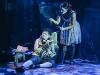
The fourth act opens with another visual flourish as Marcello’s artist’s models, one bare-breasted, bring playful sensuality to the attic. Their departure prepares the way for Mimì’s arrival and a striking shift in theatrical language. The visual exuberance gives way to restraint and intimacy, juxtaposing the bohemians’ irrepressible appetite for life with its heartbreaking fragility.
Within a single act, the sensual vitality of bohemian life yields to the stillness of impending loss. In the opera’s final moments, Costi trusts Puccini’s music and the singers to carry the tragedy without unnecessary embellishment.
Beneath its alluring visual surfaces, Opera Australia’s new La Bohème reveals the enduring humanity of Puccini’s masterpiece, where the bohemians’ irrepressible appetite for life exists alongside life’s heartbreaking fragility.
Event details
Opera Australia presents
La Bohème
by Giacomo Puccini
Director Constantine Costi
Venue: Regent Theatre | 191 Collins St, Melbourne VIC
Dates: Until 18 November 2026
Bookings: opera.org.au